Amanda Stratton (ACRA), took FAME members through how ACRA advocates with politicians and some methods that we could adopt as a sector in the UK and Ireland at the recent FAME Forum. The video of that presentation is now published:

Championing Archaeological Businesses
Amanda Stratton (ACRA), took FAME members through how ACRA advocates with politicians and some methods that we could adopt as a sector in the UK and Ireland at the recent FAME Forum. The video of that presentation is now published:
At the FAME Forum Rob Lennox (CIfA) presented on the ‘tea leaves’ of UK politics for archaeology. This presentation was recorded and is now online for you to view:
CIfA is working on a new project, with funding from Historic England, to make the UK’s archaeological standards and guidance landscape clearer and easier to navigate, and they want to hear from you.
This consultation survey (15 to 20 minutes) asks about the standards and guidance you use in your work (not just CIfA S&G, but any you access and use), what helps, what gets in the way, and where the gaps are. It’s open to anyone working in or with archaeology in the UK (whether you’re a CIfA member or non-member) – including full time employees, freelance experts, trainees or volunteers.
Your responses are anonymous unless you choose to share contact details and will directly shape how they approach standards and guidance – from prioritising what needs developing to how it’s structured, navigated and used across the sector.
Take the survey: https://www.surveymonkey.com/r/CIfA_Standards
Survey questions: to take a look at the survey questions see here
We are proud to announce that the archaeology and solar development guidance has been officially launched.
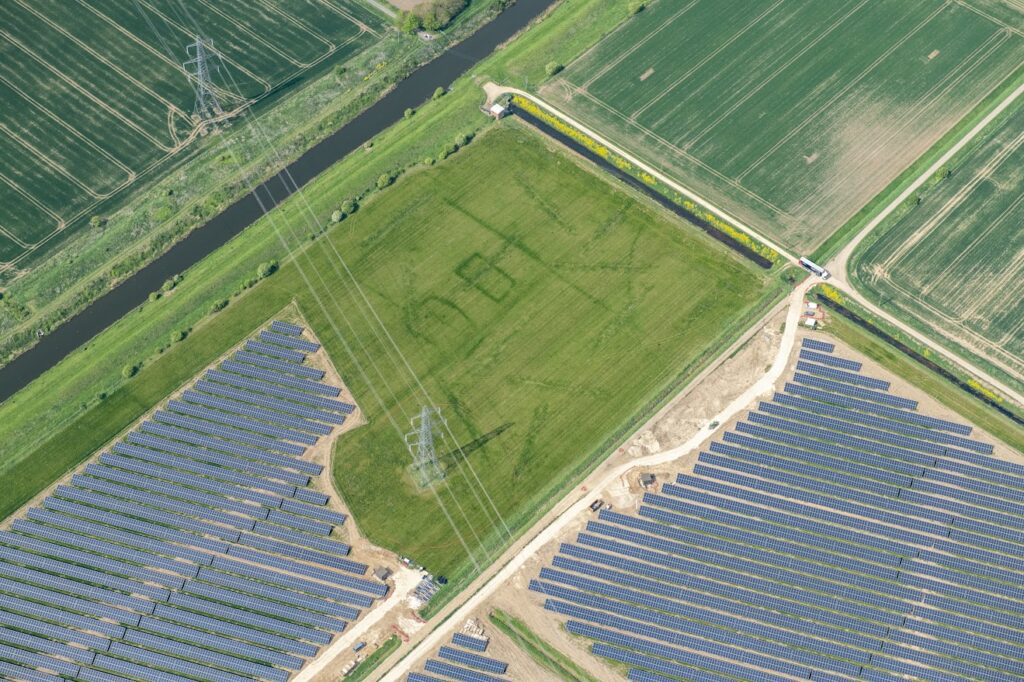
Solar energy developers can now access clear and consistent guidance on managing archaeological requirements throughout large-scale solar farm projects. Supported by professional and industry bodies, the Archaeology and Solar Farms Good Practice Guide sets out when to act, which techniques to use and how developers and archaeologists can work together effectively, from early site assessment through to decommissioning.
Through high-quality archaeological assessment, staged and focused from the outset to delivery, developers can make informed design decisions, demonstrate responsible development practice and meet planning policy requirements. A proportionate and integrated approach to evaluation techniques and design can save time and money without compromising the historic environment.
Archaeological work carried out during development can also create opportunities to connect with local communities, with finds and site histories offering a meaningful way to engage people throughout the project lifecycle.
The Guide is a result of collaboration between FAME, Solar Energy UK, the Chartered Institute for Archaeologists (CIfA), Historic England, and the Association of Local Government Archaeological Officers (ALGAO). Historic England provided funding to support its development.
The guide applies across England, Northern Ireland and Wales. Download it here:
“This guidance is a landmark in bringing two different industries together on the same page, while also building a foundation for positive and lasting relationships between archaeologists and the solar sector. The new guidelines should ensure that archaeological investigations on solar farms are conducted more consistently, lowering costs and boosting confidence in investing in the transition to renewable energy.”
Chris Hewett, Chief Executive of Solar Energy UK
We are pleased to announce that FAME, with ALGAO:UK, CIfA, Historic England, Cadw, Department of Communities, UK Government, have been working with the solar industry to create a good practice guide for archaeological work on solar farms. The stakeholders have worked tirelessly to find the common ground and produce a shared approach to understanding buried archaeological remains and their interaction with new solar farm schemes. The sector has moved quickly to develop best practice, and this document brings that into focus and puts it on paper.
You can find the guide here and on other partner websites:
FAME (the Federation of Archaeological Managers and Employers) is the trade association for commercial archaeology companies operating in the UK and Ireland, and we regularly respond to calls for consultation. We have recently done so for the Draft National Planning Policy Framework (NPPF) consulation which you can find below:
Chapter 20 Conserving and enhancing the historic environment
Overview
This new structure is welcomed as providing a clearer framework in which planning decisions can be made and referenced. The proposed revisions have retained the essential mechanisms for protection of the historic environment as part of sustainable development. It has rearranged many text sections from the previous version and amended others, so that they now fit within 11 clearly labelled policies, grouped into two main sections: plan-making and decision-making.
It is supported by three appendices for implementation, glossary and information requirements. There are some discrepancies between the content and terminology of these with the main text.
Detailed comments
HE2.2 Conservation areas – the draft document requires new or amended designations to “be accompanied by an adopted appraisal and management plan” but this paragraph needs to explicitly include “existing” (as well as new or amended) conservation areas to have appraisals and management plans. There are local authorities that have never implemented their original duty to undertake and provide conservation area appraisals and management plans which then leads to a lack of clarity as to why a designation was made, what special architectural and historic interest it contains to justify that designation, and how it should be conserved (cross refer to Policy HE9.1b which makes the assumption that these exist).
HE4.1 Heritage assets – subsection a) requires development proposals to “maintain assets” and in subsection b) to “preserve significance”. The terminology would be better to apply “conserve” to assets, and possibly to significance. Maintain suggests an ongoing programme, and preserve is a term that was removed from earlier planning frameworks (PPS and NPPF) and replaced by conserve. The duty to “preserve” listed buildings and their settings in the 1990 Act has been an area of contention at public inquiries due to its definition of retaining the original state and thus not allowing any change.
HE5.4 Accuracy of effect – the assessment process for deciding on the heritage significance of an asset is a subjective area of professional opinion, but this clause would allow decision-makers who may not be qualified or experienced, to make an arbitrary choice over how accurate an assessment might be. The wording needs to be changed or the clause removed.
HE5.5 Desk-Based Assessment – “employed” is very poor terminology. Previous iteration of the NPPF was much clearer and should be reinstated “local planning authorities should require developers to submit an appropriate desk-based assessment and, where necessary, a field evaluation” so that clarity is restored as to who has the responsibility for this action.
HE6.1 Substantial weight – footnote 74 needs to expand or cross-reference so that detail of the statutory tests are explicit. The wording in the footnote is convoluted
HE6.3 Energy efficiency – we welcome the reference to low carbon heating and energy efficiency measures as an explicit public benefit for a listed building
HE6.5 Footnote 75 – the first sentence lacks logic. If the SoS for DCMS has rejected an application to schedule or list an heritage asset, it is self-evident that that asset has not fulfilled the criteria and therefore is not of national importance. It is very confusing and legally contentious to include this sentence.
HE8.1 WHS – paragraph c) last sentence needs explanation as a footnote or change of wording as it refers to assessment of “natural environment” data. What does this mean in regard to the historic environment which the policy is seeking to protect?
HE9.1 Conservation areas – paragraph b) requires developers to use the special architectural and historic interest used to justify designation as a conservation area when designing a scheme. But this cannot be achieved if the local planning authority has not undertaken a conservation area appraisal or management plan, and some have not despite the legal requirement to do so (see comments on Policy HE2.2 above).
HE10.1 Archaeological remains – incorrect wording needs to be changed from “…. Identify the design of the development proposal…” to “…. Inform the design of the development proposal”. Should this policy be cross-referenced to HE5.5 which also requires a desk-based assessment and a field evaluation?
HE10.2 Preservation – the wording has reverted to “preservation in situ wherever feasible” which was changed between PPS and the NPPF to “conservation”, and it is always feasible to keep the archaeological assets ——- this sentence lacks the balancing statement about public benefit so should be cross-referenced to Policy HE7.2, so that the loss of archaeological assets can be justified if the public benefits from that loss, and then the second sentence sets out how mitigation for that loss can be managed.
Annex B: Glossary
No definition of a desk-based assessment or a heritage impact assessment is offered, but the Policies section employs the first, and Annex C: Information requirements employs the second without any explanation of the difference between them.
Annex C: Information requirements
“Policy theme: Heritage
National Policy HE5: Assess effects on heritage assets
Information requirement: Heritage impact assessment”
This appears to be inconsistent because Policy HE5.5 actually requires a desk-based assessment and neither the heritage impact assessment or the desk-based assessment are included in the glossary to explain the terminology. Our understanding is that heritage impact assessment is needed earlier in the planning process, for pre-application consultation and to validate an application, with a focus on designated heritage assets and their settings (therefore applicable for Policy HE5.1 – 4), whereas a desk-based assessment is generally later in the planning process to assist with determination of an application and its focus is on buried archaeological remains. The new framework would be advised to clarify this potential confusion.

The Toolkit for Managing the Ownership of Archaeological Finds in England consultation deadline has been extended to October 7th. Historic England very much welcomes all feedback, which can be submitted via this short form or by emailing FAAP@historicengland.org.uk. You can view the toolkit here: https://collectionstrust.org.uk/resource/toolkit-for-managing-the-ownership-of-archaeological-finds-in-england/, it includes a Model Deed of Transfer and sections on:

The current chair of Scotland’s Strategic Archaeology Committee (SSAC) is due to step down in December 2025. The SSAC is seeking a new chair to lead the committee as it launches Scotland’s next Archaeology Strategy in the Spring of 2026. Traditionally, this has been held by a FAME member and we would very much like to continue that tradition. For more details and how to apply: https://archaeologystrategy.scot/scotlands-archaeology-strategy-committee-needs-a-new-chair/
Scotland’s Archaeology Strategy has opened a call for submissions for Celebrating Archaeology in Scotland 2025. It seeks to showcase the value Archaeology brings to Scotland and report on the delivery of Scotland’s Archaeology Strategy’s key aims. This year will be the eighth issue and like previous years will be fully digital, available for free online and in an accessible format.
They are eager to showcase the sector’s work in bringing to light the broad range of stories represented in Scottish Archaeology. They want to ensure they recognise the physical, mental, social benefits archaeology can have to individuals and communities, as well how an informed view of our past can help build a positive view of the present and future so the 2025 theme is wellbeing in Scottish Archaeology, and would would particularly welcome content around this topic.
They would welcome any news or stories you may have as well as information for upcoming initiatives and events from the wider archaeological community.
They have room for submissions of no more than around 300 words at the most, but we would also welcome short pieces of news or notices around 50 words in length. Submissions should have at least two high-res images to illustrate the story, and more if possible. For guidelines on your submission, including image captions, copyright, and our editing process, please refer to their notes for contributors page.
Please send your submissions to ArchaeologyStrategy@hes.scot no later than the 25th of July. They hope to launch the magazine online in late October.

Both FAME and CIfA are pleased to announce that we have agreed an MoU and you can find it below and https://www.archaeologists.net/partnerships. CIfA and FAME wish to work collaboratively to maximise the positive influence each organisation has on the archaeological sector.