Championing Archaeological Businesses

Author: Doug Rocks-Macqueen

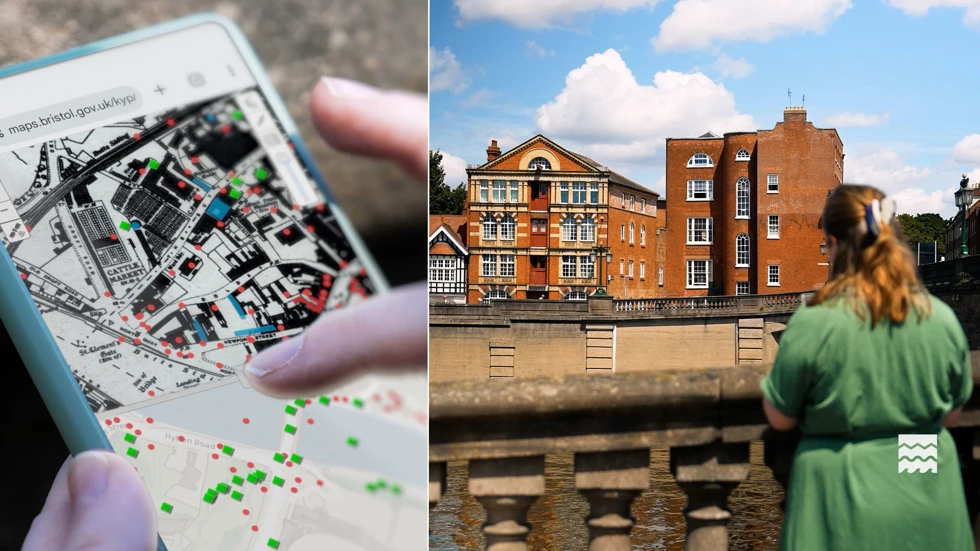
  • Resources for Explaining HERs

    Many times, we get questions from the public and our clients about archaeological processes and resources, one of which is about HERs. There is a new resource available to help with that; short video explainers. Produced by Historic England and involving the HER community up and down England, you can find the videos here: https://historicengland.org.uk/advice/technical-advice/information-management/hers/#films

  • FAME response to NPPF consultation

    FAME (the Federation of Archaeological Managers and Employers) is the trade association for commercial archaeology companies operating in the UK and Ireland, and we regularly respond to calls for consultation. We have recently done so for the Draft National Planning Policy Framework (NPPF) consulation which you can find below:

    Chapter 20 Conserving and enhancing the historic environment

    Overview

    This new structure is welcomed as providing a clearer framework in which planning decisions can be made and referenced. The proposed revisions have retained the essential mechanisms for protection of the historic environment as part of sustainable development. It has rearranged many text sections from the previous version and amended others, so that they now fit within 11 clearly labelled policies, grouped into two main sections: plan-making and decision-making.

    It is supported by three appendices for implementation, glossary and information requirements. There are some discrepancies between the content and terminology of these with the main text.

    Detailed comments

    HE2.2 Conservation areas – the draft document requires new or amended designations to “be accompanied by an adopted appraisal and management plan” but this paragraph needs to explicitly include “existing” (as well as new or amended) conservation areas to have appraisals and management plans. There are local authorities that have never implemented their original duty to undertake and provide conservation area appraisals and management plans which then leads to a lack of clarity as to why a designation was made, what special architectural and historic interest it contains to justify that designation, and how it should be conserved (cross refer to Policy HE9.1b which makes the assumption that these exist).

    HE4.1 Heritage assets – subsection a) requires development proposals to “maintain assets” and in subsection b) to “preserve significance”. The terminology would be better to apply “conserve” to assets, and possibly to significance. Maintain suggests an ongoing programme, and preserve is a term that was removed from earlier planning frameworks (PPS and NPPF) and replaced by conserve. The duty to “preserve” listed buildings and their settings in the 1990 Act has been an area of contention at public inquiries due to its definition of retaining the original state and thus not allowing any change.

    HE5.4 Accuracy of effect – the assessment process for deciding on the heritage significance of an asset is a subjective area of professional opinion, but this clause would allow decision-makers who may not be qualified or experienced, to make an arbitrary choice over how accurate an assessment might be. The wording needs to be changed or the clause removed.

    HE5.5 Desk-Based Assessment – “employed” is very poor terminology. Previous iteration of the NPPF was much clearer and should be reinstated “local planning authorities should require developers to submit an appropriate desk-based assessment and, where necessary, a field evaluation” so that clarity is restored as to who has the responsibility for this action.

    HE6.1 Substantial weight – footnote 74 needs to expand or cross-reference so that detail of the statutory tests are explicit. The wording in the footnote is convoluted

    HE6.3 Energy efficiency – we welcome the reference to low carbon heating and energy efficiency measures as an explicit public benefit for a listed building

    HE6.5 Footnote 75 – the first sentence lacks logic. If the SoS for DCMS has rejected an application to schedule or list an heritage asset, it is self-evident that that asset has not fulfilled the criteria and therefore is not of national importance. It is very confusing and legally contentious to include this sentence.

    HE8.1 WHS – paragraph c) last sentence needs explanation as a footnote or change of wording as it refers to assessment of “natural environment” data. What does this mean in regard to the historic environment which the policy is seeking to protect?

    HE9.1 Conservation areas – paragraph b) requires developers to use the special architectural and historic interest used to justify designation as a conservation area when designing a scheme. But this cannot be achieved if the local planning authority has not undertaken a conservation area appraisal or management plan, and some have not despite the legal requirement to do so (see comments on Policy HE2.2 above).

    HE10.1 Archaeological remains – incorrect wording needs to be changed from “…. Identify the design of the development proposal…” to “…. Inform the design of the development proposal”. Should this policy be cross-referenced to HE5.5 which also requires a desk-based assessment and a field evaluation?

    HE10.2 Preservation – the wording has reverted to “preservation in situ wherever feasible” which was changed between PPS and the NPPF to “conservation”, and it is always feasible to keep the archaeological assets ——- this sentence lacks the balancing statement about public benefit so should be cross-referenced to Policy HE7.2, so that the loss of archaeological assets can be justified if the public benefits from that loss, and then the second sentence sets out how mitigation for that loss can be managed.

    Annex B: Glossary

    No definition of a desk-based assessment or a heritage impact assessment is offered, but the Policies section employs the first, and Annex C: Information requirements employs the second without any explanation of the difference between them.

    Annex C: Information requirements

    “Policy theme: Heritage         

    National Policy HE5: Assess effects on heritage assets

    Information requirement: Heritage impact assessment”

    This appears to be inconsistent because Policy HE5.5 actually requires a desk-based assessment and neither the heritage impact assessment or the desk-based assessment are included in the glossary to explain the terminology. Our understanding is that heritage impact assessment is needed earlier in the planning process, for pre-application consultation and to validate an application, with a focus on designated heritage assets and their settings (therefore applicable for Policy HE5.1 – 4), whereas a desk-based assessment is generally later in the planning process to assist with determination of an application and its focus is on buried archaeological remains. The new framework would be advised to clarify this potential confusion.

  • Sponsorship Opportunities FAME Forum 2026

    FAME, the Federation of Archaeological Managers and Employers, is the trade
    association for companies working in development-led archaeology in the UK and Ireland.

    Every year, we hold a FAME Forum event, and this year it will take place over two
    days (18th and 19th June 2026) in the Merchant Taylors’ Hall, York.
    On the first day (Thursday 18th), we will have an afternoon workshop session
    focusing on Health, Safety and Environmental management, covering current,
    topical matters of importance to our members. The FAME AGM will then take place on Thursday evening (18th), which will be followed by post-AGM refreshments.

    On the second day (Friday 19th), we will have a full day of relevant presentations
    from FAME members and other interested partners, providing news and relevant, up-to-date information, advice and guidance that will support archaeological managers and employers in the running of their businesses.

    To support this event, there are a range of sponsorship opportunities available:

    1. Being “The 2026 FAME Forum Sponsor”, which will provide you with
      • a Table (as below under item 2), registration for two people and the
        opportunity to make a presentation to the entire FAME Forum for up to ten
        minutes.
      • You would be identified as the 2026 FAME Forum Sponsor on FAME’s
        website, in the FAME Forum Programme, and in any email communications we have with our membership before the FAME Forum and in any follow-up emails (informing members of any post-event follow-up). You would also be identified as the sponsor in any videos of the presentations that we produce. The Chair would publicly thank you at the start and end of each day of the FAME Forum.
        This would be for a sponsorship contribution of £10,000 (+VAT).
    2. Table
      • to have registration for one person and one table at the FAME Forum in York on Thursday 18th June 2026 from 1230 – 1800, and on Friday 19th June 2025 from 0900 – 1600. This will be a table in the hall where the FAME Forum takes place, which will give you access to all the delegates during registration, tea/coffee breaks and lunch, allowing you to network and share information about your services. This would be for a sponsorship contribution of £2,000 (+VAT).

    Separately, each of the refreshment breaks can also be sponsored:

    1. Post-AGM refreshments (18th June) – fish & chips and beer, for an estimated 60 people for £2,000 (+VAT).
    2. Morning coffee break at FAME Forum (19th June), for an estimated 90 people, for £900 (+VAT)
    3. Buffet Lunch at FAME Forum (19th June) for an estimated 90 people, for
      £3,600 (+VAT)
    4. Afternoon tea break at FAME Forum (19th June) for an estimated 90 people,
      for £900 (+VAT)

    Sponsorship of any of the refreshment breaks will also include registration for one person.

    Last year’s attendance

    • 88 Attendees
    • 39 Firms
    • 55% of UK archaeological market represented
    • £187m total gross revenues in attendance

    To discuss sponsoring this event, please contact Kenneth Aitchison, FAME CEO
    ceo@famearchaeology.co.uk

  • Digging into digital – efficiencies and ethics

    An event being organised by the Environmental Impact Assessment (EIA) Community, in collaboration with the Chartered Institute for Archaeologists (CIfA). 

    Digital and Artificial Intelligence (AI) tools are transforming ways of working in the environmental and archaeological sectors. This event brings together members from environmentalists and archaeologists to share knowledge, discuss solutions, and hear from expert speakers. 

    Join for a timely online discussion on the promise and pitfalls of digital working. The session will explore how digitised workflows and AI can drive efficiency, collaboration and insight—while also examining their carbon footprints, energy demands, and ethical implications. 

    https://www.the-ies.org/events/eia-community-discussion-digging-digital-efficiencies-and-ethics

  • Commercial Archaeological Geophysics Seminar, July 2026

    The Commercial Archaeological Geophysics Seminar returns in 2026

    Being organised by FAME member Magnitude Surveys. See the announcement below:

    After a 12-year hiatus, CAGS will take place at the Bradford Arts Centre on the 9th and 10th of July, Bradford, West Yorkshire. 

    To make this day as successful as the last, we need input from across the sector. There have been many advances in technology, shifts in the UK and abroad on the political spectrum, and changes within the wider sector since 2014. There will be many interesting papers on these topics, and it would make the day even more useful if as many of you as possible were present to actively participate and bring your experience and knowledge to the table; even better, present a paper. The goal of the Seminar is to improve not only the quality of output across the sector but also the understanding and use of the documents and results once the send button is clicked on the final report.

    For those who did not attend the 2014 seminar, it brought together those who conduct surveys, those who commission them, those who set and enforce the standards, and those who use the data and reports. The day attracted a broad cross-section of the Archaeological sector from the UK and Europe, where we discussed changes, debated ideas, and shaped the future. The day consisted of 4 sessions, each with a roundtable discussion at the end. We will return to this format in 2026. Please see the website for the 2014 proceedings.

    Call For Papers and Participation.

    We have decided against restricting papers to predetermined session titles and instead have open sessions. You decide the subjects you wish to address. When the paper proposals come in, they will be grouped by theme.  Equipment, technique, novel developments, A.I., legislatory considerations & governance, commissioning survey,  use of reports and results in the planning process, the view from outside the U.K., etc., etc.

    Papers will be 15 minutes long, followed by up to 5 minutes for clarifications. To close each session, there will be a 15-minute discussion with all presenters and the chair, during which the chair will take questions from the audience. This should allow some interesting discussions. 

    Abstracts should be no more than 200 words and can include up to three images. The submission deadline will be Friday, 3rd of April. Please submit your abstract as a pdf to 2026@cagseminar.org

    Due to time constraints and depending on the number of papers, we may ask some submissions to be presented as posters. If you feel your submission may be better suited as a poster, please make this clear at the time of submission of your abstract.

    Contact CAGS at 2026@cagseminar.org and check the website at www.cagseminar.org for registration and further details, which will be updated throughout the year.

    Hope to see many of you here in Bradford,

    CAGS Organising Committee

  • Fencing and Security of Archaeological Excavations – A FAME H&S Guide

    Archaeological organisations have a duty of care to prevent danger arising from their work. In the United Kingdom, this is enforced through the Health and Safety at Work Act 1974 (HSWA) and in Ireland, the Safety, Health and Welfare at Work Act 2005 (as amended) (SHWWA). The focus is often on the archaeologists, but we, archaeologists, need to consider ensuring the work area and excavations do not pose a risk to others who may come onto the site as visitors or trespassers.

    In construction, fencing is usually addressed by a client or Principal Contractor (PC) if the project falls within the CDM regulations in the UK. In Ireland, if the Safety, Health and Welfare at Work (Construction) Regulations (Amended 2021) (SHWWCR) apply, then it is the responsibility of the Project Supervisor Construction Stage (PSCS). However, most stand-alone archaeology projects are not subject to CDM in the UK (see FAME Health & Safety Technical Guide 0), and this guide is intended for situations where the archaeology organisation has to make the fencing decisions.

    The FAME Health and Safety Working Group creates our Health and Safety Guides to provide detailed practical advice to our members and for the archaeological sector. You can download the guide below. They rarely change but occasional updates do occur and it is best to check this page for the most recent version.

  • Job: CEO of FAME

    This job posting is now closed.

    FAME is seeking to review its Chief Executive role to provide the trade association with a strategic lead for the development and delivery of its aims and objectives. The appointee will take responsibility for FAME’s advocacy work and represent FAME with major stakeholders, with effect from July 2026.

    This is a role for an independent, senior figure with a detailed understanding of the historic environment sector looking to play an influential part in driving significant improvements in policy and operations affecting commercial archaeology in the UK and Ireland.

    The role requires excellent communication and leadership skills, diplomacy and the ability to represent FAME’s diverse membership right across the UK and Ireland without actual or perceived conflict. The proposed engagement is based on a flexible approach, attending events and meetings as required.

    On average, this part-time role requires five days a month, including attendance at various meetings around the UK and Ireland, preparation and attendance at quarterly meetings of the FAME Management Board, and organisation of the annual AGM and networking Forum.

    FAME’s secretariat includes a Deputy CEO, and the secretariat reports to the Chair, Vice-Chair, Honorary Treasurer, and directors who serve as the management board.

    The engagement is proposed on a consultancy fee basis initially for a three-year period with the possibility of extension. As appropriate, availability for some shadowing during June would be beneficial as part of a hand-over process.

    To apply for this position, please submit your CV and personal vision for leading FAME forward over the next three – five years to the Chair, Tim Malim, at: hamptonheritageltd@gmail.com

    End date for applications 28th February, short-listing and interviews before the end of March.

    For a role specification and a confidential discussion on what is involved in this key role in the heritage sector, please contact either:

    the FAME Chair, Tim Malim, at hamptonheritageltd@gmail.com;

    or the Vice-Chair, Rob Sutton Robert.Sutton@cotswoldarchaeology.co.uk.

    Job Description and Person Specifications:

  • Gaining an understanding of soil carbon and its management in an archaeological context

    Historic England has commissioned research to better understand carbon loss from soil during archaeological excavation.  The report outlines the properties and dynamics of carbon in soil and the potential effects of archaeological investigations on these. It identifies ways in which soil carbon loss can be mitigated and managed through planning and practice.

    The report introduces the science of soil and soil carbon with reference to the impact of archaeological interventions. Different estimated carbon loss scenarios are described for trial trenching and area excavation, with values for carbon loss shown, based on the area disturbed and the duration of disturbance. The report highlights the complexity of the subject, particularly in accurately measuring soil carbon.

    This new work is relevant to individuals and organisations commissioning or undertaking archaeological excavation as it contributes to ongoing discussions about archaeology, carbon reduction plans and sustainability.  Recommendations are given for how soil carbon losses can be minimised by changes in practice, for example, around soil management and timing of backfilling.

    If you’d like to hear more about this subject from the report’s author, Historic England are running a webinar at 1pm on the 25th February 2026.

  • Workshop two: “Ouch I’m new here” – mitigating the risks to new starters.

    A presentation from the FAME H&S group at the 2025 FAME Forum.