This is FAME’s 8th Health and Safety Injury Survey, which we have undertaken annually since 2018-19. This report covers the financial year 2024-25, and only covers archaeologists working in the UK. Some key findings:
Archaeology has lower RIDDOR accident rates than the construction industry.
Ill health causes the most work absences.
Slips/trips/falls cause the most injuries in development-led archaeology.
Why does FAME publish H&S statistics?
A goal of FAME’s Health & Safety strategy is to assemble industry injury and accident data to assist with the development of preventative measures and improved ways of working.
CIfA is working on a new project, with funding from Historic England, to make the UK’s archaeological standards and guidance landscape clearer and easier to navigate, and they want to hear from you.
This consultation survey (15 to 20 minutes) asks about the standards and guidance you use in your work (not just CIfA S&G, but any you access and use), what helps, what gets in the way, and where the gaps are. It’s open to anyone working in or with archaeology in the UK (whether you’re a CIfA member or non-member) – including full time employees, freelance experts, trainees or volunteers.
Your responses are anonymous unless you choose to share contact details and will directly shape how they approach standards and guidance – from prioritising what needs developing to how it’s structured, navigated and used across the sector.
At the FAME AGM on June 18th, two new board members were elected to the FAME Board, and one stepped down. Thank you to Mike Kimber for his years of service on the Board and welcome Candy Hatherley and Fiona Moore to the FAME Board.
About our new board members:
Candy Hatherley
I have worked in commercial archaeology in the UK for 30 years. My archaeological career has been varied. As a field archaeologist I worked throughout the UK and co-directed sites in Egypt and Iceland. In 2009 I joined Historic Environment Scotland as a Senior Heritage Advisor, advising and developing policies and legislation. In 2011 I joined Wessex Archaeology in their new Scottish office, developing a northern client base for fieldwork and consultancy. Between 2012 and 2015 I undertook a PhD at the University of Aberdeen specialising in the Scottish Iron Age. Alongside my studies I set up as a sole trader, offering consultancy, excavation and post-excavation services to commercial, third-sector and university clients.
I have been a Project Manager at Headland Archaeology (UK) Ltd for the last ten years. I specialise in the delivery of large-scale infrastructure projects, notably for the Renewables sector.
Fiona Moore
I have worked in the UK heritage sector since 2006, initially in Northern Ireland as a field archaeologist and consultant, before moving over the water in 2011. I briefly worked with Wessex Archaeology and then the Essex County Council Field Unit, before heading to Oxford to take a consultancy role with ADAS UK Ltd. A desire to return to academic study brought me to Nottingham, where I joined Locus Consulting for 2 years, following which I led the Trent and Peak Archaeology Heritage Consultancy team for 18 months before completing my PhD at the University of Nottingham in 2023. After a few glorious years of pouring stuff into test tubes and playing with data, I returned to real life, and moved into my current role as Regional Manager of York Archaeology’s Nottingham and Sheffield branches. I’m currently attempting (with varied success) to keep at least one foot in the research world and am hoping to publish the results of my thesis over the next year or so.
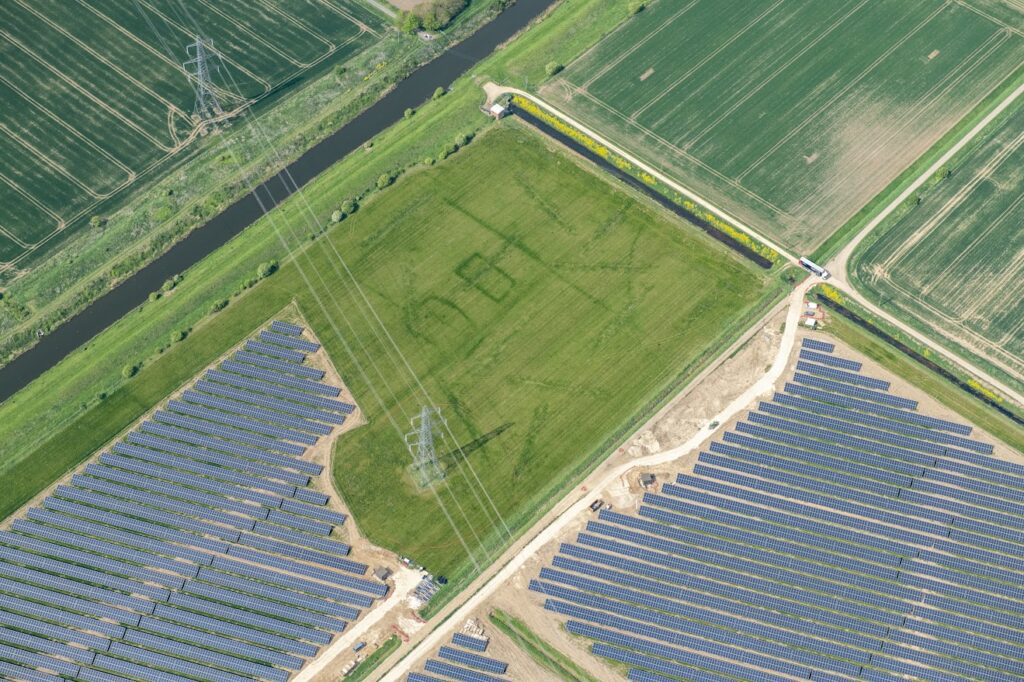
We are proud to announce that the archaeology and solar development guidance has been officially launched.
Solar energy developers can now access clear and consistent guidance on managing archaeological requirements throughout large-scale solar farm projects. Supported by professional and industry bodies, the Archaeology and Solar Farms Good Practice Guide sets out when to act, which techniques to use and how developers and archaeologists can work together effectively, from early site assessment through to decommissioning.
Early engagement
Through high-quality archaeological assessment, staged and focused from the outset to delivery, developers can make informed design decisions, demonstrate responsible development practice and meet planning policy requirements. A proportionate and integrated approach to evaluation techniques and design can save time and money without compromising the historic environment. Archaeological work carried out during development can also create opportunities to connect with local communities, with finds and site histories offering a meaningful way to engage people throughout the project lifecycle.
A partnership approach
The Guide is a result of collaboration between FAME, Solar Energy UK, the Chartered Institute for Archaeologists (CIfA), Historic England, and the Association of Local Government Archaeological Officers (ALGAO). Historic England provided funding to support its development.
The guide applies across England, Northern Ireland and Wales. Download it here:
“This guidance is a landmark in bringing two different industries together on the same page, while also building a foundation for positive and lasting relationships between archaeologists and the solar sector. The new guidelines should ensure that archaeological investigations on solar farms are conducted more consistently, lowering costs and boosting confidence in investing in the transition to renewable energy.”
After a 12-year break, CAGS returns to Bradford on 9–10 July 2026 — hosted by FAME member Magnitude Surveys.
Please find below a flyer with a full overview of both days. In short, Thursday takes stock of where commercial geophysics stands today, and Friday looks ahead to where it is going. Between the two, it will bring together a broad range of voices — surveyors, consultants, commissioners, regulators, planners, researchers and international contributors — for two days of honest, challenging and useful conversation.
The Federation of Archaeological Managers and Employers has decided to transfer delivery of the Chief Executive Officer role from our existing contract with Headland Archaeological Services to Cognaterra Ltd, effective 1st August 2026.
The CEO role is provided on a consultancy basis, to action the vision of the board and to ensure the efficient management of the organisation, and FAME’s board of directors is grateful to the contribution made by Kenneth Aitchison of Headland over the past 16 months, and to Landward Research Ltd previously, in the supply of this essential function.
The move to appoint Chris Brayne of Cognaterra has been made after a market testing exercise, which recognises the changing nature of the working environment facing FAME members. Cognaterra’s specialist combination of cutting-edge information technology and experience in management consultancy will enable FAME to develop advice and services to help the membership navigate the fast-moving technological challenges and opportunities over the next three years. The new CEO will focus on FAME’s offer as a Trade Association within the contemporary marketplace, develop its contribution to the heritage sector, and help position the organisation as a leading advocate for the industry within the UK and Ireland.
We are happy to announce the 2026 FAME Forum programme.
The AGM will occur on Thursday, 18th of June at 6pm. Before then, there will be a workshop: Collaborative Approaches to Bioarchaeology and Biomolecular Archaeology in Commercial Archaeology to be delivered by Professor Michelle Alexander and Dr Jessie Hendy of the University of York’s BioARCH team. This will also take place in Merchant Taylors’ Hall, starting at 4pm and continuing until 5pm.
On Friday 19th June 2026, the FAME Forum will be held at Merchant Taylors’ Hall, Aldwark, York YO1 7BX with a series of presentations of matters relevant to archaeological business practice for discussion.
Coffee will be available from 09:00, and the Forum will begin at 09:45. Lunch will be provided, and the day will conclude at 16:15.
09:45 Welcome
Tim Malim (Chair of the Board of FAME Directors)
10:00 Mergers, Acquisitions and Exit Strategies for Business Owners
Andy Heald & Tom Rees (AOC)
10:30 Buying Business Continuity at PCA
Chris Mayo & Mark Hinman (Pre-Construct Archaeology)
11:00 Meet FAME members – SUMO Geosurveys
Claire Rose (SUMO Geosurveys)
11:15 Teas & Coffees
11:45 Political Outlook for Archaeology
Rob Lennox (CIfA)
12:15 The Second National Highways Environmental Framework
Jim Hunter (National Highways)
12:45 Lunch
13:45 Buried Archaeology & Solar Farms: the new practice guide
Rob Sutton (Cotswold Archaeology)
14:15 FAME H&S Standards Advice – life after CSCS
Luke Brannlund (Cotswold Archaeology)
14:45 Teas & Coffees
15:15 Direct and Grassroots Advocacy for Associations
Amanda Stratton (ACRA)
15:45 Ground Truths: commercial archaeology in 2026
Consultation on the Curating the Palaeolithic project, which produced guidance and case study documents that sought to explain the importance of the English Palaeolithic record in its Pleistocene context, and outline best practices for protecting it through the planning process, illustrated by case studies from across the country. The project documents can be found here: https://historicengland.org.uk/images-books/publications/curating-the-palaeolithic/
All feedback will be treated anonymously. They anticipate that the survey should take no more than 15-20 minutes to complete. The survey is aimed at those employed in development-led archaeology, who have previously and/or currently worked with Palaeolithic and/or Pleistocene remains.
They plan to use your feedback in two ways: (i) to help us revise how we circulate and signpost the documents; and (ii) to inform revisions of the documents. The survey will be open until 31st May 2026 and all feedback will be anonymised. Please try not to include any ‘identifying information’ in your responses (e.g. individual, company or archaeological site names). Any inadvertently included ‘identifying information’ will be removed at the data analysis stage and excluded from any data visualisations (e.g. infographics) or other reporting of the data, to ensure anonymity. Survey feedback will be securely stored on a University of Reading OneDrive account and deleted by the end of 2026. You can opt out at any point prior to submitting the completed on-line survey.
If you have queries or concerns about any aspects of this feedback survey, please contact Rob Hosfield (r.hosfield@reading.ac.uk).
National Heritage Science Forum (NHSF) has launched the Year 2 HSDS User Needs Survey. The survey is aimed at anyone working with heritage science data and would welcome responses from researchers and practitioners at all career stages. It will take around 15–20 minutes to complete and will be open until 15 June 2026.
Access the survey: If you are interested, please complete the survey and pass on to colleagues and contacts in your networks. You can access the survey here: https://www.surveymonkey.com/r/HSDS_UN_Year2survey
You can respond as an organisation or individual, and A PDF version of the survey is available via this google link to support those coordinating an organisational response.
More info? You’ll find some additional information about the HSDS and links to key organisations below. If you want to know more about this research, you can contact the team via hello@tacit-heritage.co.uk.
About HSDS
HSDS provides core digital research services for the heritage science community, including a Catalogue of Services (equipment, facilities and expertise available through RICHeS) and a Data Catalogue (heritage science datasets from across the UK). It is developed by the Archaeology Data Service (ADS) in partnership with the STFC Hartree Centre and a consortium of key UK heritage bodies covering England, Scotland and Wales as part of the RICHeS programme, funded by UKRI’s Arts and Humanities Research Council.
The HSDS User Needs Research Programme is being delivered by Dr Sam Paul and Dr Manda Forster, on behalf of NHSF. If you have any questions about the survey or the research programme, please contact the team directly at: hello@tacit-heritage.co.uk
We are pleased to announce that FAME, with ALGAO:UK, CIfA, Historic England, Cadw, Department of Communities, UK Government, have been working with the solar industry to create a good practice guide for archaeological work on solar farms. The stakeholders have worked tirelessly to find the common ground and produce a shared approach to understanding buried archaeological remains and their interaction with new solar farm schemes. The sector has moved quickly to develop best practice, and this document brings that into focus and puts it on paper.
You can find the guide here and on other partner websites: