Championing Archaeological Businesses

Author: Doug Rocks-Macqueen

  • FAME Quarterly Market Confidence Index Report Q4 2018

    The Federation of Archaeological Managers and Employers (FAME) is the voice of archaeological employers and managers in the United Kingdom, and the only organisation solely devoted to representing their interests within the profession and the business world. FAME started life in 1975 as the Standing Conference of Archaeological Unit Managers, before changing the name to FAME in 2008, to reflect more closely our purpose and membership.

    The vision of FAME is to strive for a business environment where archaeological organisations can operate safely and sustainably, the well-being of employees is prioritised and archaeologists feel empowered to build careers and expertise, so that collectively we can conserve and advance knowledge of the past for the benefit of society.

    As part of this vision we support research into the sector. For example, with funding from Historic England and in partnership with the Charted Institute for Archaeologists we have commissioned Landward Research Ltd to conduct annual surveys of our members to gain a wealth of information about the archaeological sector. Part of this research examines the confidence of employers in the business environment. This material helps to estimate future job and resource demand. To get more refined information FAME has decided to launch a quarterly survey of its members’ confidence in the current market.

    You can read the results of the first quarterly survey here: FAME Quarterly Market Confidence Index 4thQ 2018

  • FAME FORUM 2019: Building a Healthier Workplace

    FAME FORUM 2019: Building a Healthier Workplace

    When and Where: Friday, June 21st, The Merchant Taylors Hall, Aldwark, York YO1 7BX

    This year’s FAME Forum takes as its theme ‘Building a Healthier Workplace’.

    Our focus is firstly on well-being, and particularly on mental health. HSE statistics show that 15.4 million working days are lost a year due to stress, depression or anxiety and it’s estimated this costs the UK economy over £70 billion per annum.

    This is a challenge for organisations in all sectors and archaeology is no different. If this is an issue that directly affects the bottom line, it also has deeply personal impacts for our ourselves, our colleagues and our employees. Employers have legal responsibilities and a duty of care, but how far does this extend and what’s the nature of an organisations responsibility under any wider and unwritten social contract? Speakers will look at how mental health issues play out at both the macro and micro level, with presentations from those involved with shaping cross sectoral policy and those implementing solutions on the ground in construction and archaeology.

    The Forum spreads its interest wider than just mental health and speakers will address the impact that issues such as good practice around equality and diversity can have on general well-being and business performance. The archaeology sector is working hard to open up opportunities to all, but more can be done and this is an opportunity to discover how.

    Although the focus of the day is on health, safety and well-being, there is also time for speakers to take the temperature of the sector more generally and consider what we know about commercial performance and employment, and what some of the big issues are going forwards for commercial archaeologists. As was asked last year, have we reached peak archaeology –is this, perhaps, as good as it gets?

    The Forum always offers a stimulating mix of speakers from within and outside our sector, but it also to provides a space for senior managers, those managing projects, functions and the organisation overall, a space to meet, network, catch up and enjoy talking shop. It’s more intimate and more focused than other events and we try to ensure it’s all relevant to the hugely challenging job of delivering great archaeology, great jobs, and great businesses.

    Tea, coffee and a buffet lunch will be provided on the day and once again we are delighted to be based at the beautiful and historic Merchant Taylors Hall.

    All members and partners can claim up to two free tickets. All other tickets are £85. Tickets are available on Eventbrite using this link:  https://www.eventbrite.com/e/fame-forum-2019-building-a-safer-workplace-tickets-62580001469

    We look forward to welcoming you in York.

    Tim Malim, FAME Chair


    Provisional running order

    The day begins with registration and coffee at 9.30

    9.45 -10.00 Welcome and Introduction

    Chris Brayne, CEO Wessex Archaeology, Vice Chair of FAME

    10.00 -10.25 Why business needs to take mental health seriously

    Dr Christian Van Stolk, The RAND Institute

    10.25 -10.50 The construction industry response to mental health

    Speaker to be confirmed, Mates in Mind

    10.50 -11.20 Tea and Coffee/Networking break

    11.20-11.45 Building diversity –the CIfA Equality and Diversity Special Interest Group

    Dr Hannah Cobb (university of Manchester) and Joe Flatman (National Trust)

    11.45-12.10 Enabling archaeologists

    Theresa O’Mahony, The Enabled Archaeology Foundation

    12.10 -12.30 Working with MIND to build a safe culture on the ground

    Alli Preece, Head of HR and Facilities, Cotswold Archaeology

    12.30-13.30 Buffet Lunch

    13.30-14.00 Safety and supply chains on UK mega projects: lessons for archaeology

    Ros Seal, HS2

    14.00 – 14.20 Discussion: How can FAME help to build a safer workplace?

    (Moderator: Dan Poore)

    14.20 – 14.45 The shape we’re in: commercial archaeology in 2019

    Doug Rocks-Maqueen, Deputy CEO, FAME

    14.45 – 15.10 21st century challenges for the commercial sector

    Jen Parker Wooding, CIfA

    15.10 – 15.30 Discussion: What are the key issues for UK commercial archaeology over the next 12 months? What does FAME need to do?

    (Moderator: Tim Malim)

    15.30-15.45 Tea and Coffee. The conference will close at 15.45


  • Archaeology Recommended to be Added to the Shortage Occupation List

    Archaeology Recommended to be Added to the Shortage Occupation List

    FAME is proud to report that the Migration Advisory Committee has recommended that archaeology jobs be included on the Shortage Occupation List (SOL) based upon the evidence we provided, in cooperation with CBA and CIfA. You can read our full response here.

    The Migration Advisory Committee recommendation is:

    “We recommend including archaeologists within SOC code 2114 (social and humanities scientists) on the SOL. The occupation ranked fairly low (83rd) in the shortage indicators and the vacancy rate is below average. However, the quantitative evidence captures the entire SOC code and not individual job titles and we received compelling evidence suggesting there is a shortage of archaeologists.”

    In layman’s terms, archaeology is categorised in a broader grouping of occupations: the social and humanities scientists. This broader occupation is ranked very low in terms of job shortage needs: 83 out of 108 broad occupations that might qualify to be on the SOL. Because of this low ranking archaeology would not normally be able to qualify to be on the Shortage Occupation List. However, we were able to provide compelling evidence that showed that archaeologists deserve to be on the list.

    The report cites our joint labour market report (with CIfA) as a key piece of data:

    “The majority of stakeholders citing jobs in archaeology referred to the archaeological market survey 2017-18. The report stated that there is a growing demand for archaeologists since 2014 due to a number of projects which include Crossrail, EA, one cable route for North Sea wind farms, A14 improvements and High Speed 2. The report suggested that there are more archaeologists working in the commercial archaeology sector than ever before, with the workforce increasing by 12.8 per cent in 2017/18 alone.”

    It also quoted some of the analysis and numbers provided by us:

    “…these measures led to meeting 65 per cent of the job demands and the remaining 35 per cent were covered by recruiting from the EEA.”

    What does this mean for the Sector?

    Currently, nothing. The government will have to implement these recommendations and although the board has recommended that the government do so as soon as possible, there is still the chance they could decide not to. It could also be months before they do. If they do, this will help the sector retain talented staff.

    What does being on the SOL mean?

    This applies to those looking to work in archaeology on a Tier 2 visa i.e. non-UK, non-EAA citizens (for a few months, this might change) and those without other options to work in the UK. In confers the following benefits onto those looking to work in UK archaeology on a Tier 2 visa:

    • There is no need to conduct the resident labour market test;
    • Job titles and occupations on the SOL are prioritised if the Tier 2 (General) limit of 20,700 is reached;
    • There is no requirement to meet the £35,800 salary threshold required for settlement after five years. This requirement is waived if the job title has been on the SOL at any point in those five years;
    • Applicants (and their families) face lower visa application fees if their occupation is on the SOL.

    In the case of the 20,700 limit, being in a PhD level occupation has meant this has never applied to archaeology, but the other aspects of these benefits will be critical in helping archaeology employers to hire new staff or retrain current staff.

    How many Archaeologists will be affected?

    Currently, FAME is only aware of three archaeologists on Tier 2 visas. While it might help, this is likely coming too late for them. It is unlikely that this will affect many archaeologists. The minimum salaries are £24,000 and £30,000 a year, depending on the length of the visa, so a portion of the jobs will not be covered by this.

    This change will affect archaeologists working in America, Canada, Australia, Mexico  etc.,  or current and former students, from non EEA countries, who would like to work here. So the numbers will grow but it is unlikely to reach much above a 100 for a long time, if ever, with this group.

    However, it has the potential to affect 15-20% of our workforce, depending on whether Brexit occurs, how it occurs and what final agreement is offered to EU citizens. The elimination of  £35k minimum to get permanent leave to remain could have a huge impact on our workforce with non-UK citizenship.

    Will this Solve the Skills Shortage?

    NO, the numbers are just too small to affect the shortage. However, combined with investment in training, better working conditions to attract and retain archaeologists and other programmes, it can play a part. There is likely no single solution to the problem, this is just one component, among many, to help.

    I am a new Archaeologists, will they take my job?

    NO, the minimum lowest possible pay is £24,000 while the starting salaries in commercial archaeology are between £20-21,ooo. They will not be able to take many entry level fieldwork jobs.

    Will this depress wages?

    NO. The Migration Advisory Committee found that those on Tier 2 Visas are paid 9% more than comparable workers*. Migrants in the current system do not depress wages.

    Will migrants take my job?

    NO. The Migration Advisory Committee report lays out the economics of migration and it does not negatively affect the abundance of jobs. It shows that the ‘lump of labour fallacy’, is just that, a fallacy.

    If it is not affecting lots of archaeologists, then why is this important?

    It is not about the number of archaeologists but the quality of their lives. This change will remove many degrading and dehumanizing barriers for some of our colleagues. It will make the sector more welcoming and a place were more people can have a career. It will help employers retain members of their team, where previously they have not always been in a position to do so. This is an important step to improving our sector.


    *Note on higher wages. This is true of all sectors except Nursing and Doctors. The medical fields have a policy to pay all migrant workers on the lowest rung when starting. With medical fields included the average pay is 4% higher, without them it is 9%.
  • Notice and Agenda for FAME AGM

    This is the notice to FAME members of the AGM

    Please register for the AGM at this Eventbrite event https://www.eventbrite.com/e/fame-annual-general-meeting-tickets-62317938632

    Notification of FAME 2019 ANNUAL GENERAL MEETING

    Barley Hall, 2 Coffee Yard, York, YO1 8AR on Thursday 20th June 2018 commencing at 5.30pm

    Agenda

    1. Apologies
    2. Register of approved voting members and declaration of quorum
    3. Minutes of the 2018 AGM
    4. Report from the Chair
    5. Treasurer’s Report
    6. Chief Executive’s Report
    7. Election of members of the Board of Directors

    The following Directors have resigned:

    • Tim Holden (Headland Archaeology)
    • Colm Moloney (Rubicon Archaeology)
    • Neil Holbrook (Cotswold Archaeology)

    The following have been nominated for election

    • Luke Craddock-Bennett (Headland Archaeology)

    This leaves TWO positions of Director to be filled by nomination and confirmatory vote at the general meeting (see NOTE 3. below)

    8. Special Resolution

    The members of the Company who at the date of this resolution are entitled to attend and vote at general meetings of the Company, hereby unanimously resolve upon the following resolution:

    THAT the existing articles of association be modified as follows:

    The wording of Article 4 be amended
    From:
    The Companys objects (Objects) are specifically restricted to the following:

    a) To represent the interests of archaeological businesses in the United Kingdom

    To:

    a) To represent the interests of archaeological businesses in the United Kingdom and the Republic of Ireland

    9. Items for information and discussion Member feedback

    10. AOB

    A presentation will be given by Dr Tim Evans of the Archaeology Data Service
    Drinks and a buffet will be served after the meeting.

    The renowned FAME social will continue afterwards, until late, at the Eagle and Child, 9 High Petergate.

    NOTES

    1. Representation and voting at AGM

    In accordance with sections 21 – 23 of our Articles of Association member organisations have one vote and shall nominate an authorised representative to vote. The authorised representative will normally be the primary named individual in the FAME records.

    2. Members have a right to appoint a proxy to attend and vote in their stead under section 324 of the Companies Act 2006 and Article 19 of the FAME Articles of Association. Proxies must be notified to the Board ahead of the AGM, by letter/email signed by the authorised representative (to: info@famearchaeology.co.uk).

    3. Members of the Board

    During 2018/2019 three members of the board have resigned.
    Written nominations, duly seconded and with the written consent of the nominee, must be received not less than 14 days before the date of the AGM – i.e. by noon on 7th June. Email evidence will be acceptable. Nominations should be sent to the Chair, Tim Malim: tmalim@slrconsulting.com

    4. Subscriptions for 2019-20 are due immediately after the AGM. Prompt payment will be much appreciated. A small uplift of c 5% will be applied with details circulated separately.

  • Common Travel Area and Archaeology

    Common Travel Area and Archaeology

    While it is still unknown how, or if, Brexit will occur there is some good news for FAME members working across the UK and Ireland. A memorandum of understanding (MoU) has been signed between the UK and Irish Governments to continue the Common Travel Area (CTA) regardless of the outcomes of Brexit. The MoU sets out an agreed policy framework for the CTA which guarantees free movement of people between Britain and Ireland. It also covers access to social security, health, education, social insurance, child benefit and pensions.

    In practical terms what does this mean for Archaeology Companies?

    • It will mean the FAME members who conduct work in both countries will be able to do so without interruption.
    • That FAME members in the UK employing Irish Citizens and FAME members in Ireland employing UK citizens will be able to do so without interruption.
    • For FAME members looking to hire new employees you can do so knowing that Irish or British citizens will be able to work for you into the foreseeable future regardless of what happens with Brexit.

    You can find the MoU here and a joint statement on it – https://www.gov.uk/government/publications/memorandum-of-understanding-between-the-uk-and-ireland-on-the-cta

    It should be noted that the Isle of Man, Guernsey and Jersey are also part of the CTA.

  • FAME Welcomes New CEO

    The Federation of Archaeological Managers and Employers is very pleased to announce the appointment of its new CEO, Dr Kenneth Aitchison, who takes up the post from the beginning of May 2019. Kenneth is a founder and director of Landward Research Ltd and has been actively involved in high level engagement with UK and European governmental, political and national agencies, representing the archaeological profession and commercial archaeological practice. A graduate of Edinburgh and Sheffield Universities, over his 30 years career Kenneth has been a field archaeologist, a project manager, Head of Projects and Professional Development for the Institute for Archaeologists, Skills Strategy Manager for Icon, the Institute of Conservation, and he was awarded his doctorate for his ground-breaking research into the structure and composition of the archaeological profession in the UK. At Landward he has specialised in labour market research, identifying sectoral skills needs and capacity building requirements, through undertaking skills surveys that build up trend data and identify and address skills gaps within the sector.

    He takes over from Nick Shepherd who has led FAME successfully over the past four years, developing its influence and profile as the voice of commercial archaeology, extending its membership into the Republic of Ireland as well as the UK. FAME’s Chairman Tim Malim says “I am delighted to have Kenneth join the company, and look forward to working with him to help deliver our shared future vision for the association. Although we will be sad to see Nick leave as we are very grateful for the huge contribution he has made during his time in post, I and the board are all excited to harness the experience and contacts that Kenneth brings, so that we can explore fresh opportunities which will help grow our advocacy and member services during the next three years and beyond”.

    7th May 2019

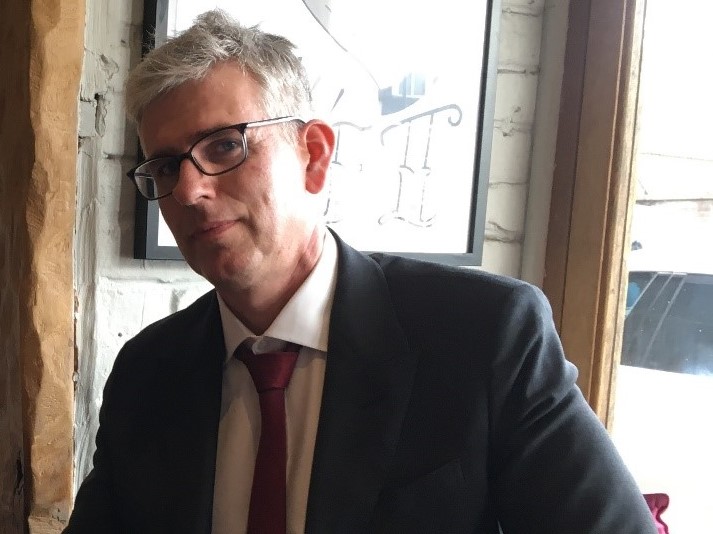
    New CEO talking with board members after latest FAME board meeting. Photo credit C.Brayne
  • FAME welcomes new member: MSDS Marine

    FAME welcomes new member: MSDS Marine

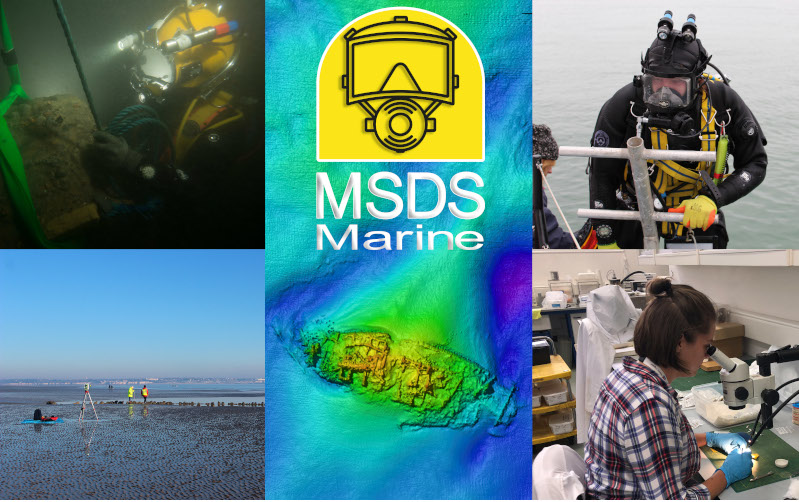
    FAME is happy to announce a new organisation has joined our membership – MSDS Marine.

    MSDS Marine are a Marine and Coastal Contractor specialising in the management, execution and support of archaeological projects in the marine environment. They have a wide range of experience and expertise within the industry from the project management of large scale underwater excavations through to the fulfilment of archaeological licence conditions prior to large infrastructure developments. Thier geophysical and hydrographic services including data collection, processing, visualisation and interpretation.

    MSDS Marine are a diving contractor registered with the HSE and provide diving and logistical support to underwater projects both on Surface Supply or SCUBA dependant on requirements. They have experience of providing support to the wider marine sector including ecological assessments, pre and post construction surveys and specialist survey solutions.

    You can find out more about them at their website: https://msdsmarine.com/en/home/

  • FAME endorses new metal detecting body

    The Federation of Archaeological Managers and Employers (FAME) welcomes the intention to set up an Institute of Detectorists. We support the principle of a regulatory body to educate and influence the behaviour of metal-detector users and requiring adherence to the Code of Practice and archaeological principles. The introduction of a registration system for metal detector users who comply with these principles and who may in the future be able to use such membership as a means to acquire CSCS cards would be of benefit to FAME members; we await further information about how the Institute will develop.

    http://www.detectorists.org.uk/

  • Bullying, harassment and discrimination: a joint statement by CIfA, FAME and the Prospect Archaeologists’ Branch

    Bullying, harassment and discrimination: a joint statement by CIfA, FAME and the Prospect Archaeologists’ Branch

    We acknowledge that the problems of bullying, harassment and discrimination which exist in society are also present in our profession and that addressing them requires a change of culture. We recognise that, as well as causing significant harm to individuals, failure to address these issues leads to the loss of talented professionals from the sector and hampers our ability to recruit the archaeologists of the future.

    We acknowledge that many organisations have policies and procedures in place in relation to equal opportunities and to bullying and/or harassment but recognise that further training and support may be needed to ensure that they are effective.

    We have different perspectives on the problem, reflecting the different remits of our organisations, but share a common interest in, and commitment to, ensuring that our profession is a safe, healthy and respectful environment for all who work in it.

    We agree that the profession has a collective responsibility for addressing the problem and that each organisation should encourage its members to work together to find solutions.

    In support of this, CIfA, FAME and the Prospect Archaeologists’ Branch are committed to

    • supporting and promoting the message that bullying, harassment and discrimination will not be tolerated across the profession
    • supporting their members to comply with the law and with professional standards
    • identifying, promoting and encouraging good practice in dealing with bullying, harassment and discrimination
    • supporting members affected by such issues and/or sign-posting sources of advice and support, as appropriate,
    • ensuring that employees are informed about their employment rights (in particular their right to join a trade union), are treated with respect in the workplace and that the employee voice plays a key role within the profession

    Our organisations will therefore publish programmes of work in line with these commitments, that are designed to improve the working environment for archaeologists and will coordinate that work through the existing Industry Working Group.

  • FAME Member News: Suffolk Archaeology & Cotswold Archaeology

    FAME Member News: Suffolk Archaeology & Cotswold Archaeology

    Suffolk Archaeology Community Interest Company has now become part of Cotswold Archaeology. This initiative builds on the strong history of collaboration between the two companies in East Anglia over the last few years on projects such as Sizewell Nuclear Power Station and the cable connection to East Anglia One offshore wind farm. Suffolk Archaeology’s current premises in Needham Market near Ipswich will  trade as the Suffolk office of Cotswold Archaeology, and Managing Director Dr Rhodri Gardner will remain Office Head and join Cotswold’s Senior Management Group.

    Suffolk Archaeology’s core operating area of Suffolk, Cambridgeshire, Essex and Norfolk is a great match with the territory that Cotswold currently services from its office in Milton Keynes. Read more here https://cotswoldarchaeology.co.uk/cotswold-archaeology-and-suffolk-archaeology-merge/